
A Philanthropy Advisor Doesn’t Do What Most People Think

When people hear the term philanthropy advisor, they often picture someone helping wealthy families give away money.
That’s part of it. But it’s not really the work.
A good philanthropy advisor is not primarily focused on giving money away.
They’re focused on helping people make thoughtful decisions where values, finances, family, and purpose intersect.
And that conversation is often much broader than charity.
It Usually Starts With Questions, Not Solutions
Most people do not wake up one morning saying:
“I think I need a charitable remainder trust.”
What they say is:
• “I’m not sure what I want my legacy to be.”
• “I have assets I’ve held for years and don’t know the smartest way to handle them.”
• “My children are doing fine financially.”
• “I want to do something meaningful.”
• “I’d like my giving to feel more intentional.”
• “I’m not sure how to structure this.”
That’s where the real work begins.
Not with products.
Not with technical diagrams.
With conversation.
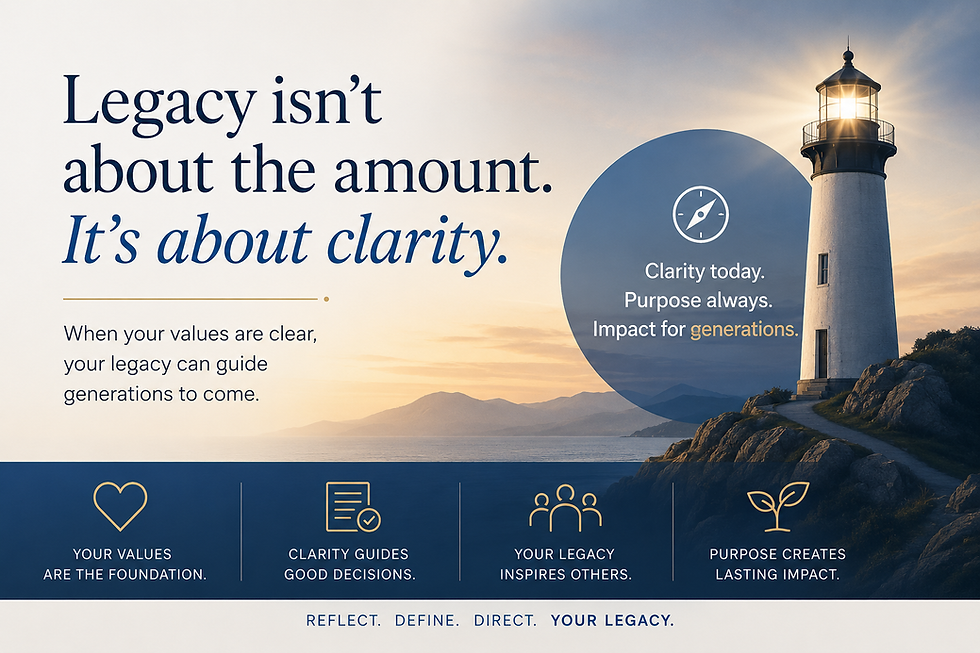
The Work Is Often About Clarity
A philanthropy advisor helps people slow down long enough to think clearly about questions that are easy to postpone.
Questions like:
• What matters most to me?
• What impact do I actually want to have?
• How much is enough for my family?
• What do I want my resources to accomplish during my lifetime?
• What would make my giving feel meaningful rather than transactional?
For some people, the answer is simple annual giving.
For others, it may involve:
• Appreciated assets
• Donor-advised funds
• Charitable trusts
• Gift annuities
• Family philanthropy discussions
• Legacy planning
• Estate conversations
But the technical tools are secondary.
The thinking comes first.
A Philanthropy Advisor Is Often a Connector
Another misconception is that philanthropy advisors replace attorneys, CPAs, or financial advisors.
They don’t.
The best philanthropy advisors work collaboratively with existing professional advisors.
In many situations, the role is actually to help connect the dots between:
• Financial planning
• Tax considerations
• Estate planning
• Family dynamics
• Charitable intent
• Long-term impact
That collaboration can help clients move from fragmented decisions to a more cohesive strategy.
Sometimes the Most Important Role Is Simply Recognizing Opportunity
Many meaningful charitable conversations never happen because no one recognizes the moment.
A donor mentions:
• Highly appreciated stock
• A business sale
• Retirement assets
• No clear heirs
• A desire for income and impact
• Concern about taxes• Interest in creating something lasting
And the conversation moves on.
Not because people lack generosity.
Because they lack structure and guidance.
Part of the role of a philanthropy advisor is simply helping identify when a situation deserves a deeper conversation.
It’s Not Just for the Ultra-Wealthy
Another common misunderstanding is that philanthropic planning is only for billionaires or private foundations.
In reality, many thoughtful charitable strategies become relevant much earlier than people assume.
Often the people asking the most meaningful questions are:
• Retirees
• Long-time savers
• Business owners
• Individuals without heirs
• Families navigating inheritance decisions
• People holding appreciated investments• Donors who want greater intentionality
Philanthropic planning is less about extreme wealth and more about alignment.
The Best Conversations Are Often Human, Not Technical
The technical side matters.
But the heart of this work is usually much simpler.
People want:
• Meaning
• Stewardship
• Clarity
• Purpose
• Confidence that their resources can do good thoughtfully
A philanthropy advisor doesn’t exist to pressure people into larger gifts.
The role is to help people think carefully about what they want their resources to accomplish — for themselves, for their families, and for the causes they care about.
Sometimes the outcome is a sophisticated charitable strategy.
Sometimes it’s simply a better conversation.

And often, that’s where meaningful philanthropy actually begins.


Comments